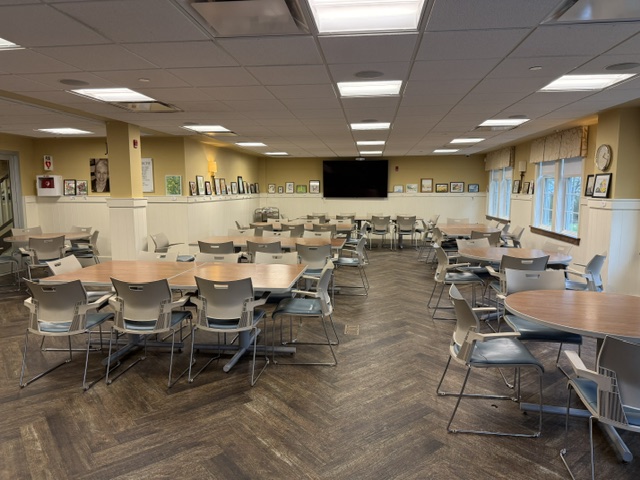
At 6:30 every morning he is greeted by an empty dining room and silent kitchen as he starts planning and laying out the ingredients for lunch for 50 to 70 diners, 20 staff, and around 90 others who stay at home, most of whom are still sound asleep.
His sous chef arrives around a half hour later and together they begin the process of rinsing and chopping vegetables, fruit, and meat, putting them, with assorted spices, into huge pots, trays and pans to fry, bake, boil, and simmer until, around 11:00, when 8 volunteers arrive to set 5 round tables, seating six each, and 5 rectangular table seating 8 each.
At 11:30, the diners pour through the door to the dining room. They walk in on strong legs, legs with canes, and legs pushing walkers. They’re part of the invisible generation, empty nesters who have aged out of careers and child rearing, here for community, a few laughs, some quiet conversation – the fun of a shared meal. They chat with waiters while they are served Iced tea, coffee, water, lemonade or cider and a choice of two first courses, two main courses and two deserts, for less per person than most restaurants charge for an appetizer.
He has arrived at this job from another country, a different culture. As a small child his mother invited him to help when she was making meals. He had fun with little things- setting a table, rinsing vegetables, scraping dishes. If he spilled, there were hugs and laughs. As he grew older, his mother taught him about spices, cuts of meat, fruits and vegetables. The process of preparing food was inextricably intertwined with a mother’s love.
“It was fun”, he says. “It was always fun.”
He went to a culinary college, became a chef. Why not chase fun instead of work?
Ten years ago he came to the US. He went to school to learn about his new country, learned a second language, English, and passed the citizenship test on the first try, all while earning a living as a chef, first at a chain restaurant, then a hotel, then here.
The volunteer waiters, also seniors, trade one liners (Grandad jokes?) and personal stories with each other and the diners. Most will tell you those few hours make their day.
He thanks them repeatedly throughout the day.
“It’s good to be grateful.”
After the diners leave, after most of the volunteers leave, he doesn’t stop. He helps the volunteer dishwasher – a senior with a damaged back who has been at it for hours – wash the last of large pots and pans. He helps others scrub down the kitchen.
“It’s fun”, he says.
(This week, the restaurant inspector rated his kitchen the cleanest in the county.)
Sometime around 3:00 pm, with the dining room and kitchen clean, quiet, and empty, he leaves for the day.
And goes to his second job: the chef at a nearby college, where he does it al over again, this time with a staff of 25, serving around 280 diners.
He gets home sometime after 7:00PM, twelve or thirteen hours after he started.
“People who get tired don’t like their jobs,” he says. “I have fun every day.”